

Why the Best NOC Providers Also Deliver Integrated Helpdesk Services
For managed service providers (MSPs) and mid-market IT organizations, Network Operations Center (NOC) services are the backbone of reliable IT operations. A NOC delivers proactive monitoring, alert management, patching, and remediation to keep servers, networks, and infrastructure running smoothly around the clock.
But infrastructure is only half the story. When an issue affects an end user, someone still has to communicate with that user, troubleshoot the desktop or application problem, provide status updates, and confirm the issue is fully resolved. That’s why organizations increasingly look for a partner that offers integrated NOC and Helpdesk services, not two disconnected support functions, but one unified IT support model.
What Are Integrated NOC and Helpdesk Services?
Integrated NOC and Helpdesk services combine network operations center monitoring with IT helpdesk support under a single provider, using shared tools, ticketing systems, and communication channels. Instead of infrastructure teams and end-user support teams working in silos, they operate as one connected unit from the first alert to final resolution.
Why Infrastructure and End Users Are Closely Connected
Most IT incidents don’t fit neatly into one category. A slow application could stem from a server issue, a network bottleneck, an endpoint misconfiguration, or simple user error. When NOC and helpdesk teams operate independently or worse, through separate vendors, tickets bounce between teams while valuable resolution time is lost figuring out ownership.
An integrated NOC and helpdesk model removes these handoffs entirely. Because both teams share the same documentation, SLAs, and ticketing workflow, incidents move seamlessly from infrastructure diagnostics to end-user resolution resulting in faster fixes and a better experience for everyone involved.
Proactive Monitoring Meets Responsive Helpdesk Support
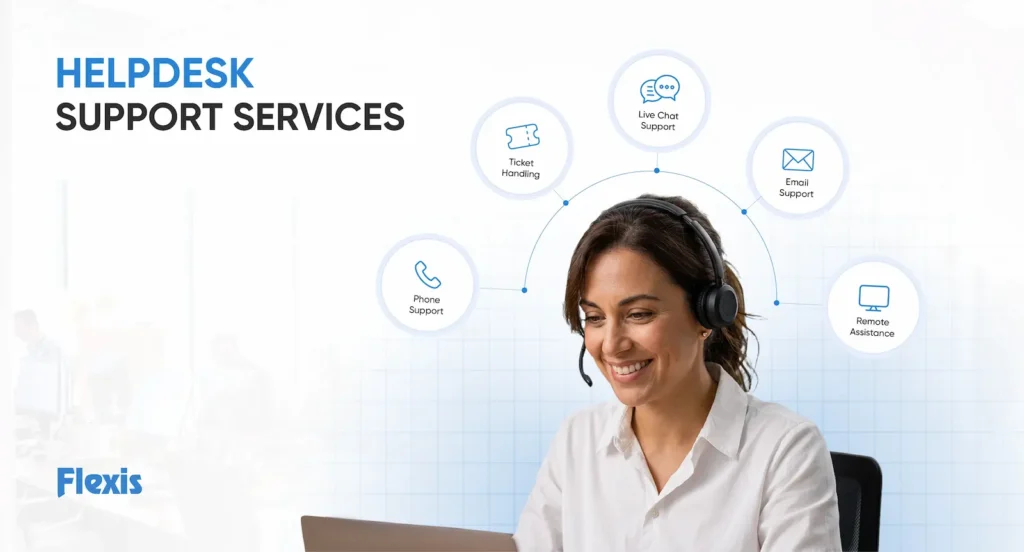
One of the biggest strengths of a managed NOC service is catching problems before users ever notice them, low disk space, failed backups, high CPU utilization, or failing hardware can be flagged and remediated proactively through 24/7 network monitoring.
But what happens when users begin noticing the impact?
In many cases, the NOC is already aware of the issue and actively working to resolve it. Because the Help Desk and NOC work together, the Help Desk can provide users with timely updates, reassure them that the issue is being addressed, and reduce duplicate tickets while resolution is underway.
An integrated Helpdesk team provides the missing link. Support technicians can communicate directly with affected users, gather additional information, manage expectations, and verify that services have been fully restored once the NOC completes remediation.
Instead of simply resolving the technical issue, organizations deliver a complete support experience.
Better Collaboration Means Fewer Delays
When NOC and helpdesk services come from separate vendors, communication usually relies on emails, ticket transfers, and multi-step escalation chains which often results in finger pointing.
With a single integrated provider, both teams work inside the same service organization, using a shared ticketing system and standardized escalation procedures. Incidents move efficiently from first user contact through full technical resolution, cutting duplicate troubleshooting and unnecessary escalations.
Full Visibility Across Your Entire IT Environment

Combining NOC and helpdesk services also gives you a complete, end-to-end view of your IT environment. NOC engineers track infrastructure health, monitoring alerts, and performance trends, while helpdesk technicians understand exactly how those technical issues affect end users day to day.
Together, this shared visibility helps:
- Identify recurring issues faster
- Improve root cause analysis
- Prioritize long-term fixes that prevent repeat incidents
Rather than treating infrastructure and end-user support as separate disciplines, you get one unified picture of IT performance.
Simplified Vendor Management
Partnering with a single provider for both NOC monitoring and IT helpdesk support also simplifies day-to-day vendor management. Instead of juggling multiple contracts or resolving disputes over whose responsibility an issue is, you have one accountable partner covering both infrastructure and end-user support — with clearer accountability and more consistent service delivery.
Stronger Together: One Team, One Support Experience
While standalone NOC or Helpdesk services each provide significant value, the combination of both creates a more powerful operational model. Proactive monitoring is complemented by responsive end-user support. Infrastructure issues are resolved more quickly because communication flows seamlessly between teams. End users receive faster updates, better service, and fewer disruptions.
For MSPs and IT organizations, choosing a provider that delivers integrated NOC and Helpdesk services isn’t simply about consolidating vendors it’s about improving operational efficiency, accelerating incident resolution, and delivering a better experience for both IT teams and the users they support.
When your monitoring, remediation, and user support teams work together as one, your entire IT operation becomes stronger, more responsive, and better equipped to keep your business running smoothly. For more information on how to leverage NOC services to improve your service delivery, we’d love to connect.
Share this article
Share this article
For more information
Nick Blozan
VP Sales & Marketing