
Outsourced IT Helpdesk Services: How to Navigate Summer Staffing Challenges
For many IT teams, summer can create a unique operational challenge. Employees want to take well-deserved vacations, key team members may be unavailable due to illness, and organizations often balance major projects with day-to-day support responsibilities.
The result is a familiar problem: maintaining service levels with fewer available resources.
While hiring additional staff may seem like the obvious solution, it is often impractical for temporary fluctuations in demand. Recruiting, onboarding, and training new employees take time and introduce additional costs that seasonal staffing needs may not justify.
This is where outsourced IT helpdesk services provide real, measurable value, offering a flexible, scalable way to maintain support quality without the overhead of permanent hires.
What Is an Outsourced Helpdesk Model?
An outsourced helpdesk model allows organizations to extend their internal IT support capacity through a trusted third-party provider, without replacing their existing team. Rather than functioning as a disconnected external vendor, a well-integrated outsourced helpdesk operates as a true extension of your internal operations, absorbing ticket volume, maintaining response times, and ensuring end users continue receiving timely support even when internal resources are stretched thin.
This model works particularly well for organizations that need tier 1 and tier 2 IT support coverage during predictable or unpredictable staffing gaps, without committing to the long-term cost of additional full-time employees.
When Do Businesses Need Outsourced Helpdesk Support?
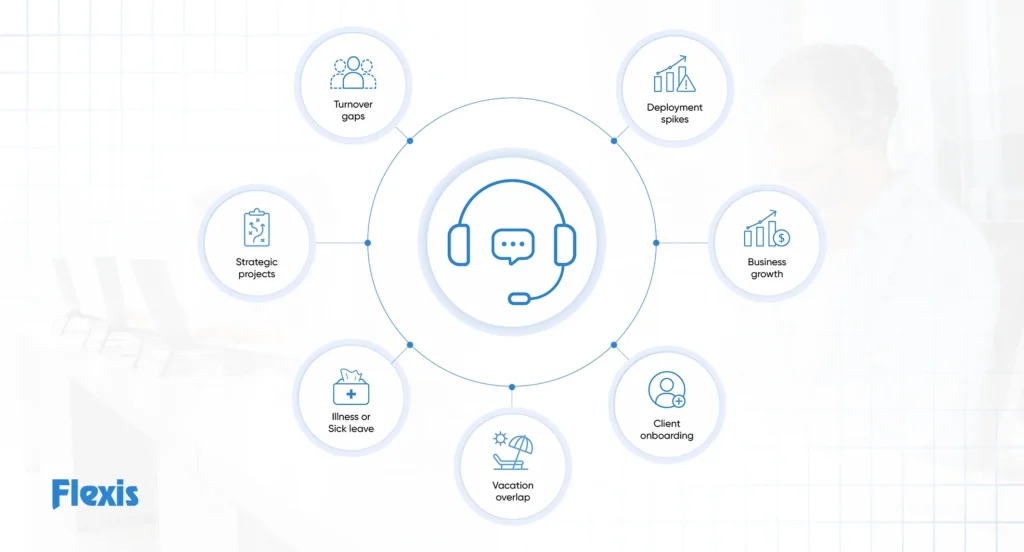
While summer vacation season is a common trigger, it’s far from the only scenario where outsourced helpdesk support makes sense. Organizations typically turn to outsourced IT support when:
- Multiple employees are on vacation simultaneously
- Team members are out due to illness or unexpected leave
- Internal staff are focused on strategic projects and initiatives
- Staff turnover creates temporary coverage gaps
- Major technology deployments create spikes in support tickets
- Business growth drives higher overall ticket volume
- New customer or client onboarding requires additional capacity
In each of these situations, a managed helpdesk partner helps maintain SLA-backed support levels without overburdening existing staff — protecting both productivity and end-user satisfaction.
Creating a Flexible Support Model
Rather than viewing outsourced helpdesk as a replacement for internal staff, many IT teams use it as a strategic extension of their existing team. A trusted service provider can help absorb ticket volume, maintain response times, and ensure end users continue to receive the support they need when internal resources become constrained.
One of the biggest advantages of an outsourced helpdesk partnership is flexibility. Many service providers offer engagement models that allow organizations to start with a relatively small monthly commitment, sometimes as low as 20 tickets per month. This provides the foundation for a long-term partnership while ensuring the service provider becomes familiar with the organization’s environment, processes, users, and support expectations.
When staffing needs increase, organizations can easily scale usage to 40, 50, 100, or more tickets per month without the delays associated with hiring additional personnel.
Leverage Existing Tools and Processes
One concern organizations sometimes have about outsourcing support is the potential disruption to existing workflows. The right helpdesk partner should operate within your environment rather than forcing you to adopt new tools or processes.
Leading outsourced helpdesk providers leverage your existing ticketing systems, documentation platforms, remote management tools, and operational procedures. End users experience a seamless support process while your organization maintains visibility and control.
This approach allows the outsourced team to function as a true extension of your helpdesk operation rather than a disconnected third-party service.
Delivering a Better End-User Experience
Maintaining service quality is critical, particularly during periods of reduced staffing. A quality outsourced helpdesk provider can help improve the end-user experience through high first-call resolution rates, experienced support technicians, and consistent service delivery.
This means maintaining customer satisfaction even when internal resources are stretched thin and ensuring users continue receiving timely support without delays caused by resource constraints.
Organizations should also look for providers that offer North American-based support teams capable of delivering strong communication skills, customer service expertise, and technical proficiency.
A Scalable Solution for Growing IT Teams
The reality is that staffing challenges are not limited to the summer months. Vacations, sick leave, project demands, and business growth can impact support capacity throughout the year.
By establishing an outsourced helpdesk relationship with a modest monthly commitment, organizations gain access to a scalable support model that can expand as needed. Instead of scrambling to find resources when challenges arise, IT teams have a trusted partner already integrated into their operations and ready to help.
For organizations seeking to improve flexibility, reduce staffing pressure, and maintain exceptional service levels, outsourced helpdesk services can provide a practical and cost-effective extension of the internal IT team. For more information on how you can insulate your business from resource headaches, we’d love to connect.
Frequently Asked Questions
Is outsourced helpdesk support only useful in summer?
Not at all. While vacation season is a common driver, staffing gaps caused by turnover, illness, project demands, and business growth can occur at any point during the year.
Will an outsourced helpdesk replace our internal IT team?
No. Most organizations use outsourced helpdesk services as a supplement to their internal team, absorbing overflow ticket volume during vacations, project crunches, or growth periods rather than replacing existing staff.
How quickly can an outsourced helpdesk provider be onboarded?
Onboarding timelines vary, but most providers can be integrated into existing ticketing and documentation systems far faster than the recruiting, hiring, and training cycle required for a new full-time employee.
Share this article
Share this article
For more information
Nick Blozan
VP Sales & Marketing