
Co-Managed Helpdesk in 2026: A Smarter, More Cost-Effective Support Model for your Internal Team
Helpdesk and service desk support are some of the most resource-intensive — and business-critical — functions in IT. End users expect fast, friendly responses, while IT leaders are under constant pressure to control costs, meet SLAs, and keep their best engineers focused on strategic work.
In 2026, more MSPs and mid-market IT teams are turning to co-managed helpdesk and service desk models to strike that balance. But not all co-managed offerings are created equal. The most effective approach is a blended hybrid model that combines North American phone support with non-phone ticket handling — delivering high service quality without the high cost.
What Makes a Co-Managed Helpdesk Model Different?
Unlike traditional outsourcing, a co-managed helpdesk is designed to work alongside your existing team, not replace it. It allows you to retain control, visibility, and customer relationships while offloading volume, variability, and operational noise.
This hybrid co-managed model is built around three core principles:
- Keep end-user experience high
- Reduce cost per ticket
- Improve scalability and resilience
Hybrid Delivery: The Best of Both Worlds
One of the biggest challenges in helpdesk outsourcing is balancing cost with customer experience. This model solves that problem by splitting support by function, not by customer.
North American Phone Support
Phone calls are where tone, clarity, and cultural alignment matter most. Live phone support is handled by North American-based technicians, ensuring:
- Clear communication with end users
- Strong customer satisfaction
- Professional representation of your brand
Ticket-Based Helpdesk/Service Desk Support
Our ticket-based helpdesk provides efficient, asynchronous support for issues that don’t require live phone interaction, allowing requests to be handled quickly and cost-effectively by the appropriate technician. This low-touch model is ideal for routine tasks, service requests, and non-urgent issues while maintaining full visibility and accountability.
Value of the ticket-based approach:
- Lower cost of support by eliminating unnecessary phone time and enabling efficient workload distribution
- Faster resolution for routine issues through structured intake, prioritization, and automation
- Scalable and predictable support model that flexes with ticket volume without increasing fixed staffing costs
Built-In Triage: Eliminate Ticket Noise
Another hidden drain on helpdesk productivity is ticket noise — requests that aren’t actually helpdesk issues at all. Hardware procurement questions, vendor sales calls, or misrouted requests waste valuable technician time.
This co-managed model includes a triage layer that:
- Identifies non-helpdesk inquiries immediately
- Escalates them directly to the appropriate internal team
- Prevents unnecessary troubleshooting and back-and-forth
That means fewer distractions for your helpdesk and faster resolution for the business. The immediate triage inquiry can also be handled at a lower cost since it doesn’t require the troubleshooting effort of a regular helpdesk issue.
Flexible Support That Adapts to Reality
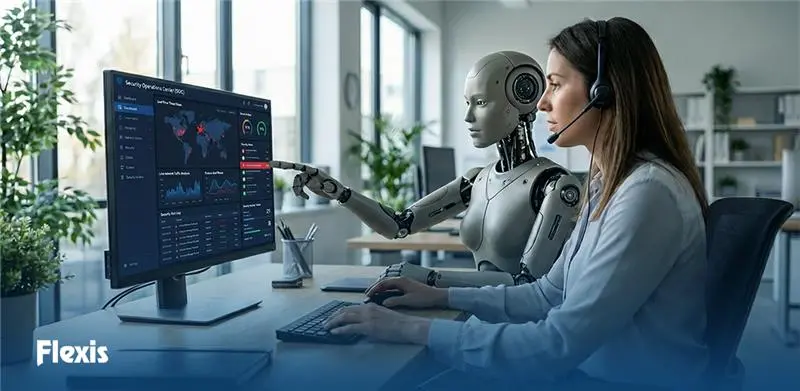
Staffing a helpdesk for “normal” conditions is easy. Staffing it for reality — vacations, illnesses, resignations, terminations, and unexpected spikes — is not.
This service is designed to support both augmentation and full outsourcing scenarios.
Augment Your Existing Team
For teams with internal helpdesk staff, the service can:
- Commit to a minimum number of tickets per month
- Surge during staffing gaps or unexpected demand
- Provide immediate coverage without hiring or overtime
Flexis augments your existing help desk, allowing your internal team to focus on business-critical application support while our Flexis Help Desk handles Tier 1 and Tier 2 requests.
Fully Outsourced Helpdesk
For organizations that want to outsource entirely, the same model provides:
- End-to-end helpdesk coverage
- Consistent service levels
- Predictable costs with built-in scalability
Why This Model Works
For MSPs, this approach improves margins by lowering cost of delivery and allowing internal engineers to focus on higher-value, revenue-generating work.
For mid-market IT teams, it delivers enterprise-grade support without enterprise-level headcount.
Most importantly, it creates a helpdesk operation that is resilient, cost-effective, and scalable — without sacrificing the user experience.
In 2026, the question isn’t whether to co-manage your helpdesk. It’s whether you’re using a model that actually aligns cost, quality, and flexibility. A hybrid co-managed service desk does exactly that. For more information on how Flexis can help you optimize your helpdesk service, let’s connect.
Share this article
North American Phone Support
Share this article
For more information
Nick Blozan
VP Sales & Marketing