
Optimizing Your IT Team in 2026: Eliminate the Work No One Wants to Do with a Dedicated NOC Engineer
Every MSP and IT department has the same dirty secret: there’s a pile of work that everyone knows needs to be done, but no one actually has time (or wants) to do it. Disk space warnings, failed backups, patching tasks that keep getting pushed back week after week, the kind of low-priority but high-risk maintenance that quietly piles up until something breaks.
In 2026, the smartest IT leaders are solving this chronic problem by adding a remote dedicated Network Operations Center (NOC) engineer to their team, someone whose full-time focus is keeping up with those routine but important tasks your internal staff are tired of hearing about.
1. Cleaning Up the “We’ll Get to It Later” Pile
Every IT team has a backlog: endless desktop alerts, Windows update failures, antivirus warnings, and low disk space notifications that no one has time for. It’s not that your engineers don’t care; it’s that they’re focused on higher-value work.
A dedicated NOC engineer can handle all of it. They proactively clear those lingering alerts, verify backup completions, and ensure that updates are actually installed successfully. Instead of playing catch-up after something breaks, your customers’ systems stay clean, healthy, and current.
The result is fewer surprise outages, less after-hours firefighting, and a far happier internal team.
2. Handling the Work Your Engineers Secretly Dread
Let’s be honest, your internal engineers didn’t get into IT to chase failed patches or manually restart backup jobs. They want to design systems, solve complex problems, and build new capabilities for your clients or organization.
When those same engineers are stuck managing tickets for mundane but necessary maintenance, morale drops and productivity suffers. A dedicated remote NOC engineer picks up that operational noise, the constant monitoring, follow-ups, and remediation that must happen but often gets delayed, and gets it done consistently and quietly in the background.
Your engineers get back to doing the work that excites them. The dedicated engineer takes care of the work no one enjoys, but everyone depends on.
3. Leveraging Your Existing RMM and Ticketing Tools
One of the best parts of bringing on a remote dedicated NOC engineer is how seamlessly they integrate into your stack. There’s no need for new platforms or extra layers of management. The right partner will work with you to identify an engineer who already has experience with your tools so they can hit the ground running.
Your NOC engineer works directly inside your existing RMM and ticketing systems — whether that’s ConnectWise, Kaseya, N-Able, or NinjaOne- and follows your escalation paths and SLAs. They work your queue, under your processes, just like an internal team member.
From your clients’ perspective, it’s still your brand — only now, their issues get attention faster, and the lingering alerts finally disappear.
4. Off-Hours Maintenance Without Burning Out Your Team
Maintenance windows don’t respect your staff’s sleep schedule. Patching, updates, migrations, and firmware upgrades often need to happen overnight — which usually means someone’s working late or logging in on the weekend.
With a dedicated NOC engineer assigned to an overlapping shift, those critical after-hours tasks get handled professionally and on time, without burning out your senior engineers. Backups are verified, patches are deployed, and overnight maintenance projects get completed while your core team rests. Because there is some overlap, you can still communicate with your dedicated engineer every single day as necessary.
5. Turning Pain Points Into Productivity
A dedicated NOC engineer will do more than just clean up old tickets; they change your team’s entire rhythm. The “stuff that slips” stops slipping. The nagging, low-level alerts disappear. Your environment runs smoother, your engineers stay focused, and your clients notice the difference.
In 2026, successful MSPs and mid-market IT departments aren’t asking their top talent to babysit backup jobs or chase disk alerts. They’re offloading that work to dedicated NOC resources who thrive on operational excellence so their core team can innovate, not react.
6. All the Benefits of an Internal Employee — Without the Costs or Hassles
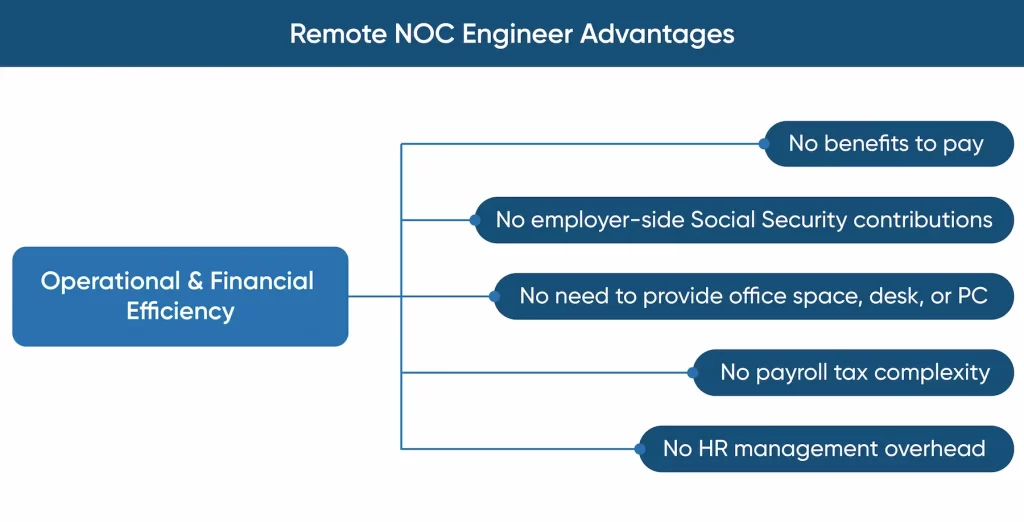
One of the biggest advantages of a remote NOC engineer is the operational and financial efficiency:
- No benefits to pay
- No employer-side Social Security contributions
- No need to provide office space, desk, or PC
- No payroll tax complexity
- No HR management overhead
You get a fully functional, deeply integrated member of your team – someone who works seamlessly with your ticketing system, alerts, and processes, without the administrative burden that comes with a traditional hire.
It’s the performance of an internal engineer with the simplicity of a service.
If your engineers are tired, your maintenance queue is growing, and your alert dashboard looks like a Christmas tree, it’s time to optimize. A dedicated NOC engineer from Flexis IT won’t replace your team; they’ll rescue them from the tasks they hate, stabilize your operations, and keep your entire environment running smoothly.
For more information on how you can optimize outsourcing to fuel your managed services business, we welcome the opportunity to connect. Click here to set a 15-minute meeting, give us a call or send an email.
Share this article
Share this article
For more information
Nick Blozan
VP Sales & Marketing